Why Small Roof Leaks Turn Into Big Problems
This is a subtitle for your new post
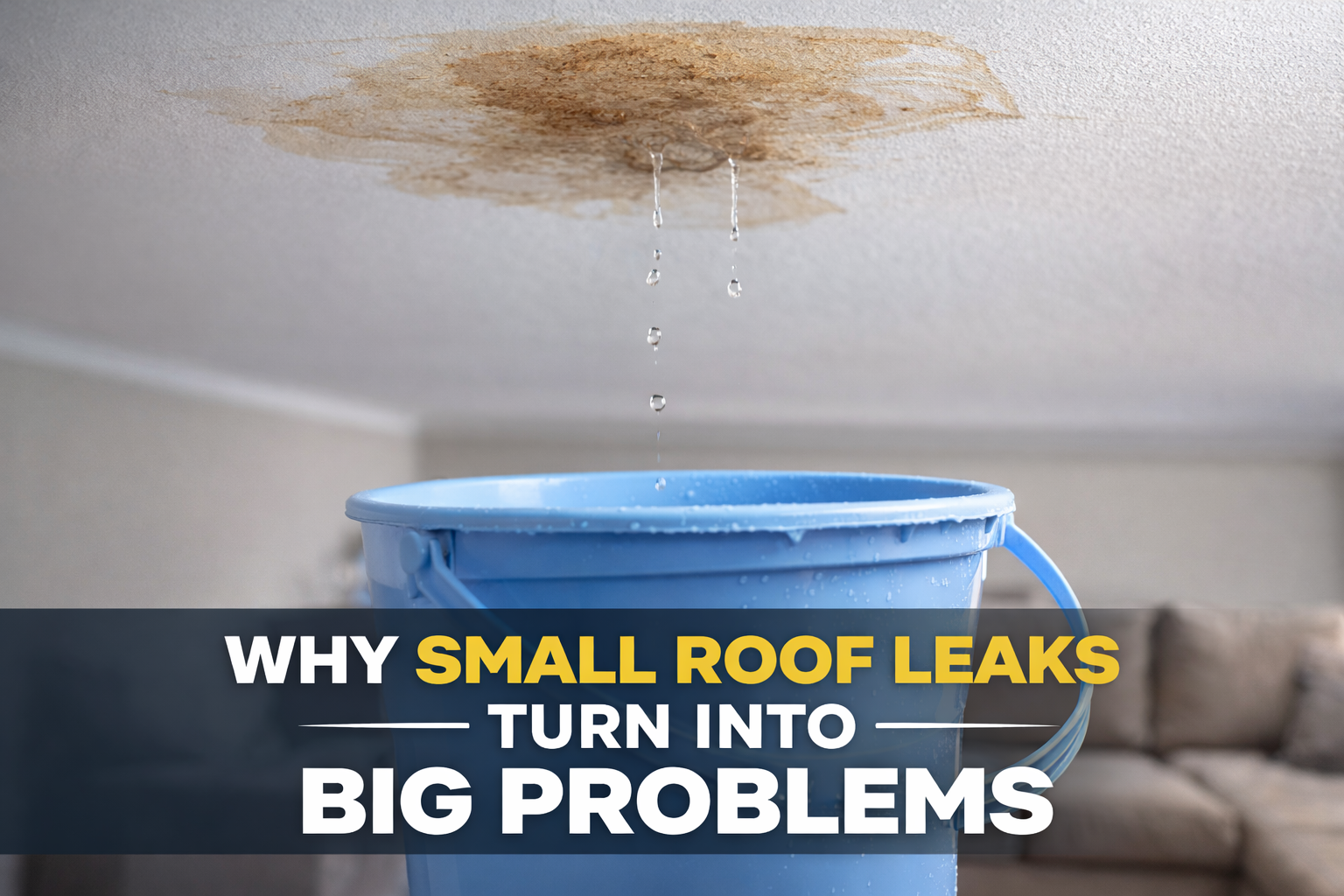
A small roof leak may not look serious at first. It might be a tiny water stain on the ceiling or a few drops during heavy rain. Many homeowners ignore these early signs, thinking the problem will go away on its own. Unfortunately, roof leaks never fix themselves. What starts as a small issue can slowly turn into major damage if left untreated. Understanding how and why this happens can help you protect your home and avoid costly repairs.
Small Leaks Are Often Hidden
One of the biggest dangers of roof leaks is that they are usually hidden. Water does not always drip straight down. It can travel along beams, insulation, and roof layers before showing inside your home. By the time you see a stain or moisture, the leak may have already been active for weeks or even months. This hidden movement allows damage to spread quietly without warning.
Water Weakens the Roof Structure
When water enters your roof, it begins soaking the wooden structure underneath. Over time, moisture causes wood to rot and weaken. Roof decking, rafters, and support beams lose their strength slowly. This can make the roof unsafe and reduce its ability to handle heavy rain or strong winds. Structural damage is one of the most expensive problems caused by small leaks.
Insulation Damage Raises Energy Costs
Roof leaks often soak the insulation inside your attic. Wet insulation loses its ability to regulate indoor temperature. This means your home becomes harder to heat in winter and cool in summer. As a result, your energy bills increase without a clear reason. Many homeowners only discover insulation damage when the leak has already caused serious moisture problems.
Mold and Mildew Grow Quickly
Moist environments are perfect for mold and mildew growth. Even a small roof leak can create enough moisture for mold to develop within days. Mold spreads fast and can affect ceilings, walls, and air quality. Besides damaging your home, mold can also cause health problems such as allergies and breathing issues. Once mold spreads, cleanup becomes more difficult and costly.
Ceilings and Walls Get Damaged
Water from a small roof leak eventually reaches your ceilings and walls. At first, you may see discoloration or bubbling paint. Over time, drywall becomes soft and begins to crack or collapse. What could have been a minor repair can turn into full ceiling or wall replacement. Interior repairs often cost more than fixing the roof itself.
Electrical Hazards Can Develop
Roof leaks near electrical wiring can be dangerous. Water can reach light fixtures, outlets, and ceiling wiring. This increases the risk of short circuits, power failures, or even electrical fires. Electrical repairs combined with roof damage significantly increase overall repair costs. Safety risks are one of the most serious reasons why leaks should never be ignored.
Pests Are Attracted to Moist Areas
Damp areas caused by leaks attract pests such as termites, ants, rodents, and insects. Termites are especially dangerous because they feed on wet wood. Once pests enter your roof or attic, they can cause additional structural damage. A small leak can unintentionally invite a much larger infestation problem.
Roof Materials Deteriorate Faster
Roofing materials are designed to handle water on the surface, not underneath. When water penetrates the roof layers, materials begin breaking down. Shingles can lift, membranes can crack, and seals around vents or chimneys can fail. This accelerates roof aging and shortens its overall lifespan significantly.
Repair Costs Increase Over Time
One of the biggest reasons small leaks become big problems is delay. A minor repair done early is usually affordable. But when water damage spreads to insulation, wood, ceilings, and electrical systems, repair costs multiply. What could have been a simple fix may turn into a major renovation project. Early action always saves money.
Small Leaks Often Indicate Bigger Issues
A small leak may be a sign of a larger roofing problem. It could point to poor installation, aging materials, or drainage issues. Ignoring the leak means ignoring the warning. Over time, multiple weak spots can develop, increasing the chance of widespread roof failure during heavy storms or extreme weather.
Conclusion
Small roof leaks may seem harmless, but they can cause serious damage when left untreated. From mold growth and structural weakness to rising energy bills and safety risks, the consequences add up quickly. The earlier a leak is identified and repaired, the easier and less expensive the solution will be. Regular roof inspections and timely repairs are the best way to protect your home, your budget, and your peace of mind.
You might also like
DIY vs. Professional Roof Repairs: What Homeowners Should Know